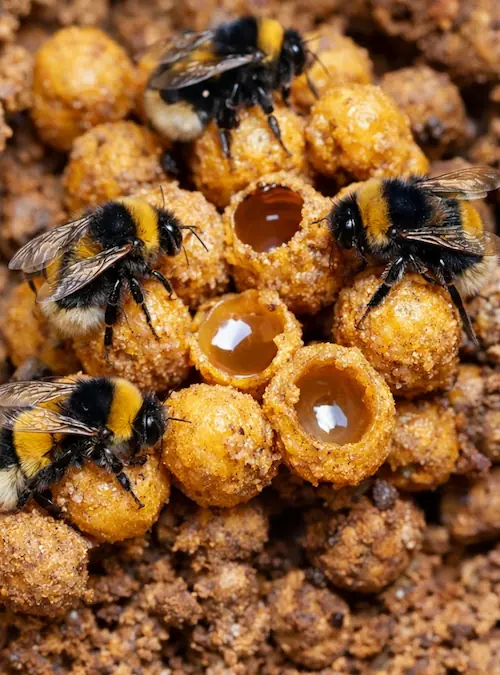
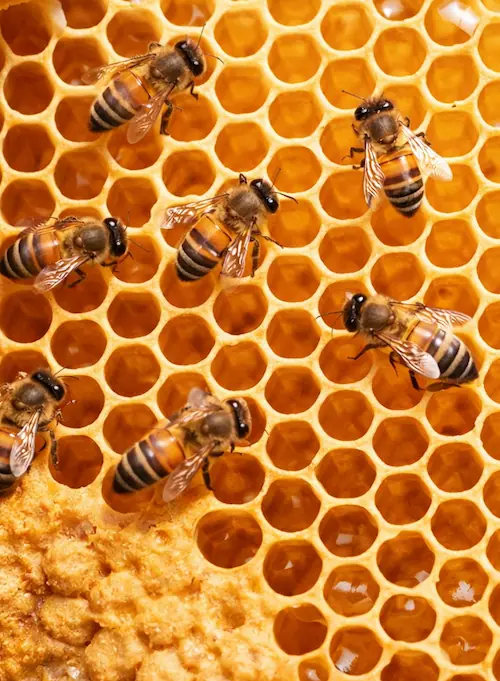
One of the most interesting things about bumblebees is how differently they live compared with honeybees. Bumblebee colonies are much smaller, often consisting of just a few hundred individuals, and they usually nest in the ground or in sheltered spaces such as abandoned rodent burrows.
Their colonies are also seasonal. Only the queen survives through winter, then starts a new colony the following year. That shorter, more flexible colony life helps explain why the nest structure looks so different from the organised comb of a honeybee hive.
Why the nest looks different
Instead of building large, uniform hives, bumblebees create clusters of irregular wax cells where they store nectar and raise their young. The result may look rough or uneven, but it is efficient, adaptable, and quick to build.
Not all bees build the same way
Bumblebees create small rounded wax pots to store food and raise their young, while honeybees build the familiar hexagonal comb most people recognise immediately. Two very different styles, serving two very different colony structures.