ShopStoriesContactReviewsFAQ
Back to stories

Wildlife · African bush

The honey badger — South Africa's most fearless hive raider

Meet the honey badger — or ratel — one of South Africa's boldest wild animals. With its silver back, powerful claws, and fearless reputation, this tough little hunter is famous for raiding beehives. But it doesn't just eat honey: it also goes after bee larvae, insects, reptiles, eggs, and small animals. Strong, solitary, and stubborn, the honey badger has become a true icon of the African bush.

Built for the hive

The honey badger is practically designed to raid a beehive.

It is not just boldness that gets the honey badger into a hive — it is a remarkable set of physical adaptations that make bee stings almost irrelevant.

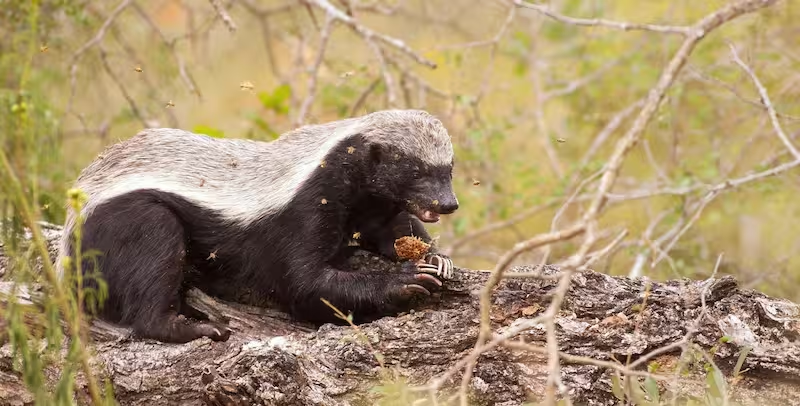
A honey badger in the African bush

The honey badger's skin is thick, loose, and surprisingly tough — tough enough that bee stings rarely penetrate deeply enough to cause real pain. Around the face and neck, where a hive attack would be most intense, the skin is especially resistant. A honey badger can push its snout directly into an active colony and take hundreds of stings while barely reacting.

Its claws are built for digging through hardened earth and rotting wood. Tearing open a hive cavity in a tree or rock face is not a problem. Once inside, the honey badger goes straight for the comb — eating honey, bee larvae, and brood in one focused burst before moving on.

What it is actually after

Despite the name, honey is not always the main prize. Bee larvae and brood are rich in protein and fat, and honey badgers will often prioritise these over the honey itself. They are opportunistic enough to take whatever the hive offers — and fast enough to be gone before the colony can mount a serious defence.

An unlikely partnership

The honeyguide bird — and one of nature's most unusual arrangements.

The honey badger does not always find its hives alone. There is a small bird in sub-Saharan Africa called the greater honeyguide (Indicator indicator) that has developed a working relationship with both honey badgers and humans to locate bees. The bird finds the hive, makes a distinctive chattering call, and leads its partner toward it. The badger — or the human — does the breaking in. Both get to eat.

This behaviour is well-documented with human honey hunters across parts of Africa, and appears to work the same way with honey badgers in the wild. It is one of the few examples of a wild bird actively guiding a mammal to food — not by accident, but as a repeated, learned strategy.

Solitary, stubborn, and almost impossible to discourage

Honey badgers are solitary animals with large home ranges and exceptional persistence. Once a badger has found a reliable food source, it will return to it repeatedly. Beekeepers in rural parts of South Africa know this well — a honey badger that finds your hives will come back until the situation is resolved. They have been observed returning to the same spot night after night, trying different angles of approach each time.

Fearless is not an exaggeration

The Guinness World Records listed the honey badger as the world's most fearless animal for a reason. They have been recorded taking on puff adders, black mambas, and even confronting lions over a kill. Venom resistance is thought to play a role — honey badgers have survived bites that would kill most animals of their size. That same resilience extends to bee stings, wasp attacks, and anything else a disturbed hive throws at them.

For a small animal — rarely more than 12 kg — the honey badger punches well above its weight. In the African bush, that reputation is entirely earned.

Bee activity at your property?

The honey badger may be Africa's most persistent hive raider, but for everything else — swarms, structural hives, and wasp nests — Charles at Bee Bandits is the calmer option.

WhatsApp Us24-hour service
📞 Call💬 WhatsApp