StoriesContactFAQ
Back to stories

Educational · Bee behaviour

Why bees swarm — and what to do if you see one

A cluster of bees hanging in your garden can look alarming, but a swarm is one of the most natural things a honeybee colony does. Understanding what is happening makes it much easier to know how to respond.

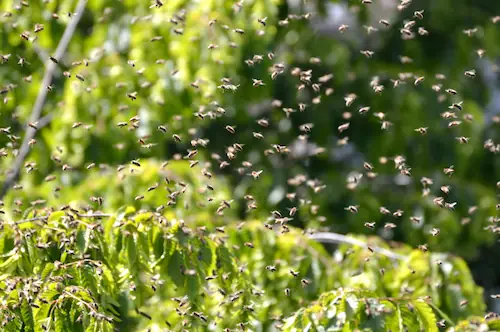
A honeybee swarm clustered together

What swarming is

Swarming is how honeybee colonies reproduce.

When a honeybee colony grows too large for its current home, it splits. The original queen leaves with roughly half the workers — sometimes thousands of bees — to find a new place to live. The bees that stay behind raise a new queen and continue in the original hive.

The departing group is called a swarm. Before the bees leave, they gorge on honey to fuel the journey. This is important: a swarm is full of food and has no home to defend. That makes it, in most cases, unusually calm.

When does swarming happen?

In the Western Cape, swarming peaks in spring — roughly September through November — when colonies that built up over winter reach their maximum size and begin running out of space. A warm spell after a cool period often triggers a wave of swarm activity across the region.

Swarms can also happen outside spring if a colony is disturbed or relocated, but the classic garden swarm is most common in those warmer spring months.

What the cluster is doing

When a swarm leaves its hive, it does not go straight to a new home. The bees cluster together — usually on a tree branch, fence post, wall, or gate — while scout bees fan out to find suitable cavities nearby. The scouts report back, the bees debate the options, and eventually the whole swarm moves on to the chosen site.

This temporary cluster can stay in place for anywhere from a few hours to two or three days. If you leave it alone and it is not in a problematic location, it will often move on by itself.

A bee swarm clustered on a tree branch

What to do

How to respond when you find a swarm on your property.

Stay calm and keep distance

A resting swarm is not looking for trouble. The bees are focused on finding a new home, not on you. Keep children and pets away from the cluster, avoid loud noise or vibration near it, and do not spray it with water or chemicals. Disturbing a swarm is the most reliable way to provoke it.

Do not try to move it yourself

Even a calm swarm can react quickly if handled incorrectly. Moving a cluster without the right equipment and experience is genuinely risky. A professional can collect the swarm safely and, where possible, relocate the bees to a more suitable environment rather than destroying them.

Watch where it is heading

The critical question is whether the swarm is still outdoors on a temporary surface, or whether it has started moving into a structure. Bees entering a wall cavity, roof space, chimney, or ceiling are no longer just passing through — they are setting up a permanent hive. Once comb is built and honey is stored, removal becomes significantly more involved.

If you see bees actively entering a gap in a wall or roofline, call sooner rather than later. An established hive takes weeks to build but can take much longer to safely remove.

When to call Bee Bandits

Call if the swarm is in a location where children or pets cannot safely avoid it, if it has been in place for more than two days without moving, or if you can see bees disappearing into any part of your home. Charles can assess the situation on-site, advise on whether removal is necessary, and collect or relocate the bees safely if it is.

Good to know

A few things most people do not know about bee swarms.

Swarms are not the same as established hives

A swarm has no comb, no honey stores, and no brood to protect. An established hive has all three. The defensiveness of bees increases significantly once they have built comb and stored resources. Catching a swarm early — before it moves into a structure — is almost always simpler and less disruptive for everyone involved.

Honeybees are worth relocating

Honeybees are pollinators. They are responsible for a significant portion of the food crops grown in South Africa and play an essential role in the wider ecosystem. Bee Bandits handles honeybee swarms with relocation in mind wherever the situation allows — the goal is to move the bees somewhere appropriate, not to destroy them.

The size of a swarm is not a measure of danger

A large swarm of ten thousand bees resting quietly on a fence is far less dangerous than a small, established hive inside a wall that has been there for months. Size and threat level are not the same thing. The behaviour and location of the bees matters far more than how many there appear to be.

Seen a swarm at your property?

Send Charles a photo or a quick description and he can advise on whether you need a callout or whether the swarm is likely to move on by itself.

WhatsApp Us24-hour service